
 Expected losses are in the 5-15% range, but many inverters are less efficient when operated at low power. While the panels may be capable of supplying a certain amount of power, this doesn't matter until there is sufficient load to consume that power.How much power does a solar inverter lose?Expected losses are in the 5-15% range, but many inverters are less efficient when operated at low power. While the panels may be capable of supplying a certain amount of power, this doesn't matter until there is sufficient load to consume that power.
How do inverter losses affect a design?The process of selecting the topology, components and operating parameters (voltage, current and switching frequency) of an inverter is highly affected by the anticipated inverter losses. An accurate estimate of the losses occurring in each part of an inverter can significantly contribute to achieving an enhanced inverter design.
What if inverter load is less than 15%?In general, if the inverter is loaded less than 15%, the efficiency will be low. As a result, a good match between inverter capacity and load capacity will allow us to obtain more efficiency, which is more ac output power from the inverter for the same DC input power. Efficiency of Inverter per Output Power (Reference: inverter.com).
Do two-level inverters have switching losses?Losses in two-level inverters have been reported extensively in the literature. Researchers have also investigated semiconductor losses in three-level inverters. Estimates of switching losses have been obtained using approximations of IGBT and diode I-V switching characteristics [1, 4, 17, 18].
How efficient is a power inverter?By efficiency, we mean how much of the electricity that passes into the inverter is converted into usable AC (nothing is ever 100 percent efficient, there will always be some losses in the system). This efficiency figure will fluctuate depending on how much power is being used at the time, with greater power resulting in higher efficiency.
How well do you know inverter clipping losses?We’ve previously shown that over-power clipping losses aren’t nearly what most people expect them to be—for a DC-to-AC ratio of 1.2 in Georgia, an engineer can expect clipping losses of just 0.
Expected losses are in the 5-15% range, but many inverters are less efficient when operated at low power. While the panels may be capable of supplying a certain amount of power, this doesn't matter until there is sufficient load to consume that power.How much power does a solar inverter lose?Expected losses are in the 5-15% range, but many inverters are less efficient when operated at low power. While the panels may be capable of supplying a certain amount of power, this doesn't matter until there is sufficient load to consume that power.
How do inverter losses affect a design?The process of selecting the topology, components and operating parameters (voltage, current and switching frequency) of an inverter is highly affected by the anticipated inverter losses. An accurate estimate of the losses occurring in each part of an inverter can significantly contribute to achieving an enhanced inverter design.
What if inverter load is less than 15%?In general, if the inverter is loaded less than 15%, the efficiency will be low. As a result, a good match between inverter capacity and load capacity will allow us to obtain more efficiency, which is more ac output power from the inverter for the same DC input power. Efficiency of Inverter per Output Power (Reference: inverter.com).
Do two-level inverters have switching losses?Losses in two-level inverters have been reported extensively in the literature. Researchers have also investigated semiconductor losses in three-level inverters. Estimates of switching losses have been obtained using approximations of IGBT and diode I-V switching characteristics [1, 4, 17, 18].
How efficient is a power inverter?By efficiency, we mean how much of the electricity that passes into the inverter is converted into usable AC (nothing is ever 100 percent efficient, there will always be some losses in the system). This efficiency figure will fluctuate depending on how much power is being used at the time, with greater power resulting in higher efficiency.
How well do you know inverter clipping losses?We’ve previously shown that over-power clipping losses aren’t nearly what most people expect them to be—for a DC-to-AC ratio of 1.2 in Georgia, an engineer can expect clipping losses of just 0.
Inverters inherently experience power losses due to conversion, thermal effects, and parasitic components; understanding these losses can help maximize energy yield. Solar
Get Price
Understanding inverter power loss, selecting efficient inverters and adopting appropriate energy saving measures to improve the efficiency of
Get Price
The key driver here is the "clipping loss": when the DC power feeding an inverter is more than the inverter can handle, the resulting power is
Get Price
The performance simulations can analyze the whole efficiency of inverter curve for devices with CEC test data, rather than using a fixed, weighted efficiency to determine DC/AC
Get Price
The DC to AC inverter ratio (also known as the Inverter Load Ratio, or "ILR") is an important parameter when designing a solar project.
Get Price
The short answer is yes, inverters can lose efficiency over time, but the extent and speed at which this happens depend on various factors. All electronic components degrade
Get Price
In a "regular" system (constrained by physical space or by budget), the DC/AC ratio is a tradeoff of clipping losses versus inverter cost. A smaller-capacity inverter will cost less up
Get Price
The short answer is yes, inverters can lose efficiency over time, but the extent and speed at which this happens depend on various factors. All electronic components degrade
Get Price
Calculation Example: The efficiency of an inverter is defined as the ratio of the AC output power to the DC input power. The higher the efficiency, the less power is lost in the
Get Price
Inverter efficiency is a critical factor to consider when choosing an inverter for various applications, including solar power systems, electric vehicle chargers, uninterruptible
Get Price
Learn to optimize your PV energy system by adjusting cabling, degradation, and environmental losses for improved efficiency and performance.
Get Price
In a "regular" system (constrained by physical space or by budget), the DC/AC ratio is a tradeoff of clipping losses versus inverter cost. A smaller
Get Price
If you look at the total energy lost due to using an inverter, then total losses are average 75% from using an inverter. This is due to modern appliances all running on DC power.
Get Price
This paper investigates semiconductor and DC-link capacitor losses in two two-level and two three-level voltage source inverters. The components of the four inverters are selected to have
Get Price
Inverter manufacturers in India must focus on designing products with high-quality components and advanced control algorithms to improve
Get Price
The homegrown inverter, as explained in Chapter 1, is a two-stage inverter with a DC-DC boost converter followed by an H-bridge inverter. The thermal model is developed for all six switches
Get Price
Understanding inverter power loss, selecting efficient inverters and adopting appropriate energy saving measures to improve the efficiency of home energy use.
Get Price
Expected losses are in the 5-15% range, but many inverters are less efficient when operated at low power. While the panels may be capable of supplying a certain amount of
Get Price
PV system losses have a substantial impact on the overall efficiency and output power of solar panel arrays. Good solar design takes into account 10 main PV losses, while best design and
Get Price
This example shows how to compute switching losses in a three-phase 3-level inverter, combining Specialized Power Systems and Simscape™ blocks.
Get Price
Looking to understand PV system losses in detail? Part 4 examines Environmental Conditions, Inverter Losses & Clipping, and more.
Get Price
Note: High-quality inverters with MPPT technology can significantly improve the performance of renewable energy systems, reducing energy losses and increasing overall efficiency. The Role
Get Price
DC-based lighting (LED) is as much as 75% more efficient than incandescent lighting. How does the conversion from DC to AC occur? The energy loss from DC to AC
Get Price
Many 120V devices can run on DC without using an inverter and the AC/DC wall-wort. You can simply read the output specs of the wall-wort or the input specs of the device, to determine if it
Get Price
Many 120V devices can run on DC without using an inverter and the AC/DC wall-wort. You can simply read the output specs of the wall-wort or the input specs
Get Price
The relationship between array size (DC) and inverter size (AC) is known as DC:AC ratio. Historically, 1.2 ~ 1.3 is a considered good ratio to minimize clipping (losses)
Get Price
Thus a 9 kW PV array paired with a 7.6 kW AC inverter would have an ideal DC/AC ratio with minimal power loss. Clipping Losses and DC/AC Ratio When
Get Price
Expected losses are in the 5-15% range, but many inverters are less efficient when operated at low power. While the panels may be capable of supplying a certain amount of power, this doesn't matter until there is sufficient load to consume that power.
The process of selecting the topology, components and operating parameters (voltage, current and switching frequency) of an inverter is highly affected by the anticipated inverter losses. An accurate estimate of the losses occurring in each part of an inverter can significantly contribute to achieving an enhanced inverter design.
In general, if the inverter is loaded less than 15%, the efficiency will be low. As a result, a good match between inverter capacity and load capacity will allow us to obtain more efficiency, which is more ac output power from the inverter for the same DC input power. Efficiency of Inverter per Output Power (Reference: inverter.com)
Losses in two-level inverters have been reported extensively in the literature. Researchers have also investigated semiconductor losses in three-level inverters. Estimates of switching losses have been obtained using approximations of IGBT and diode I-V switching characteristics [1, 4, 17, 18].
By efficiency, we mean how much of the electricity that passes into the inverter is converted into usable AC (nothing is ever 100 percent efficient, there will always be some losses in the system). This efficiency figure will fluctuate depending on how much power is being used at the time, with greater power resulting in higher efficiency.
We’ve previously shown that over-power clipping losses aren’t nearly what most people expect them to be—for a DC-to-AC ratio of 1.2 in Georgia, an engineer can expect clipping losses of just 0.2%.
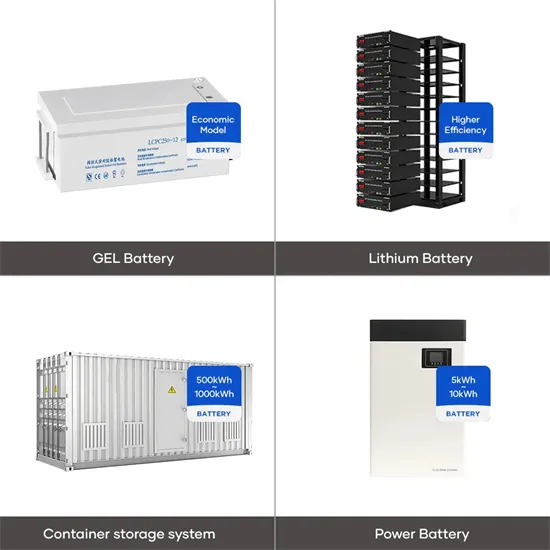
The global commercial and industrial solar energy storage battery market is experiencing unprecedented growth, with demand increasing by over 400% in the past three years. Large-scale battery storage solutions now account for approximately 45% of all new commercial solar installations worldwide. North America leads with a 42% market share, driven by corporate sustainability goals and federal investment tax credits that reduce total system costs by 30-35%. Europe follows with a 35% market share, where standardized industrial storage designs have cut installation timelines by 60% compared to custom solutions. Asia-Pacific represents the fastest-growing region at a 50% CAGR, with manufacturing innovations reducing system prices by 20% annually. Emerging markets are adopting commercial storage for peak shaving and energy cost reduction, with typical payback periods of 3-6 years. Modern industrial installations now feature integrated systems with 50kWh to multi-megawatt capacity at costs below $500/kWh for complete energy solutions.
Technological advancements are dramatically improving solar energy storage battery performance while reducing costs for commercial applications. Next-generation battery management systems maintain optimal performance with 50% less energy loss, extending battery lifespan to 20+ years. Standardized plug-and-play designs have reduced installation costs from $1,000/kW to $550/kW since 2022. Smart integration features now allow industrial systems to operate as virtual power plants, increasing business savings by 40% through time-of-use optimization and grid services. Safety innovations including multi-stage protection and thermal management systems have reduced insurance premiums by 30% for commercial storage installations. New modular designs enable capacity expansion through simple battery additions at just $450/kWh for incremental storage. These innovations have significantly improved ROI, with commercial projects typically achieving payback in 4-7 years depending on local electricity rates and incentive programs. Recent pricing trends show standard industrial systems (50-100kWh) starting at $25,000 and premium systems (200-500kWh) from $100,000, with flexible financing options available for businesses.
 US DC inverter device
 Inverter DC high voltage protection
 The inverter voltage doubler output is DC
 Series DC Motor Inverter
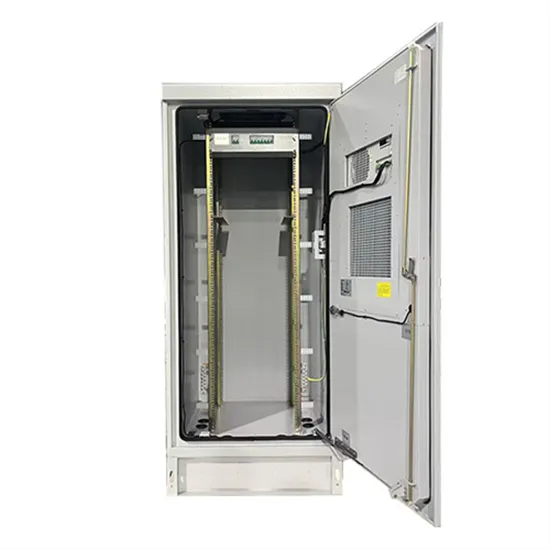 Inverter DC pump voltage
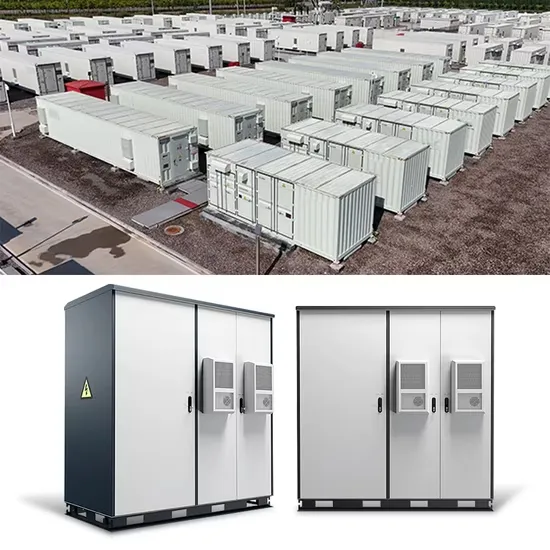 Afghanistan DC Inverter Device Factory
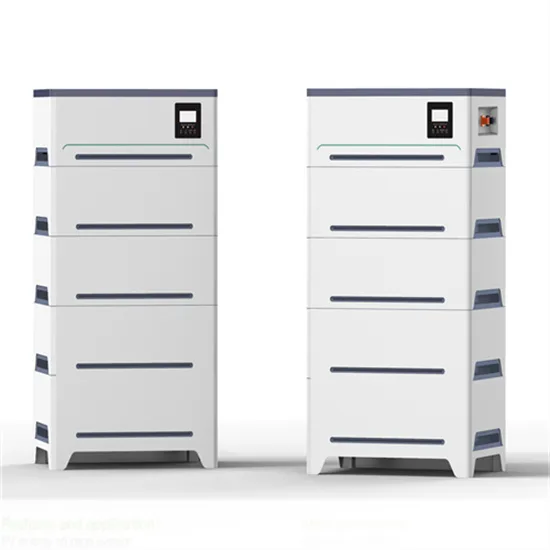 Ultra-high current DC special inverter
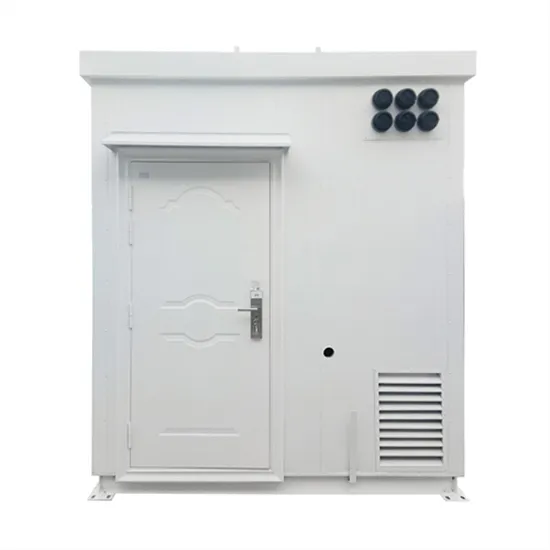 Industrial inverter DC to AC